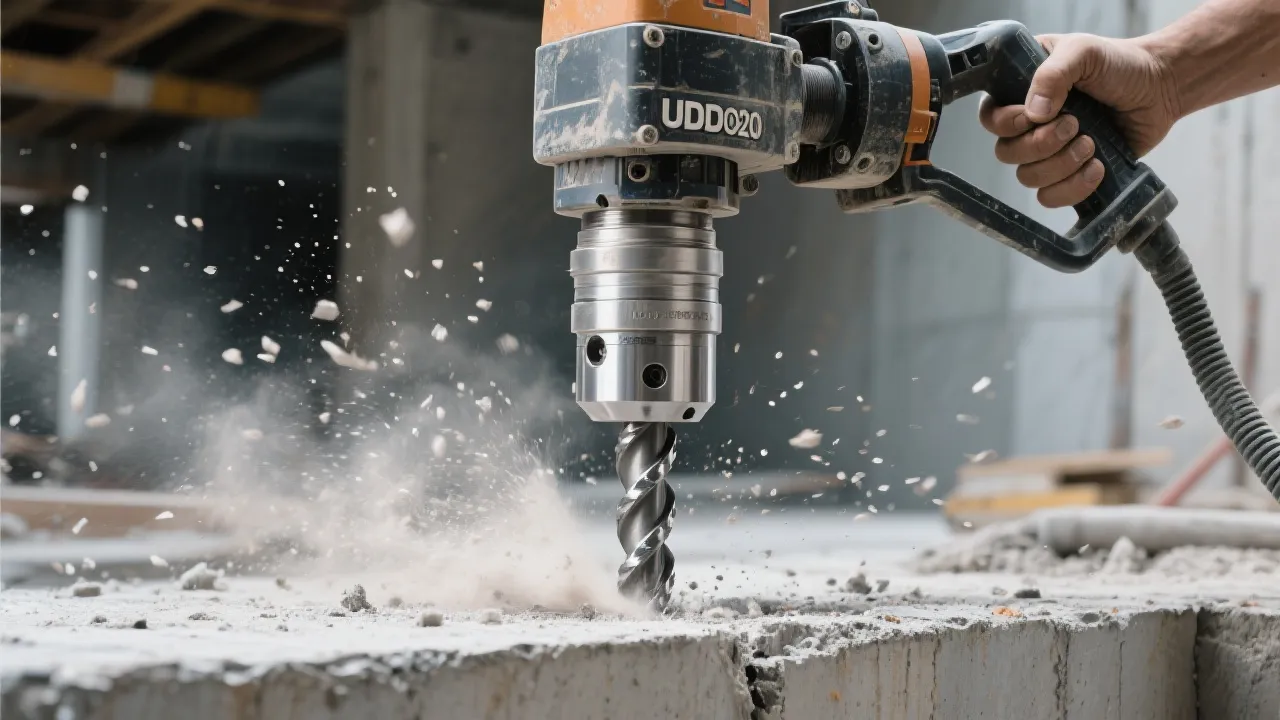
Industrial tool procurement is rarely about “the hardest tool”—it is about the right ultrahard cutting tool for your workpiece, accuracy target, machine conditions, and total cost per part. This practical guide is written for buyers and engineers who source tools for metalworking and stone cutting & grinding, helping you evaluate options consistently and avoid mismatches.
The same ultrahard tool behaves differently across materials and process windows. Begin by documenting what you cut and what you need to achieve:
Clear inputs here make later decisions (bonding method, abrasive selection, geometry) faster and more defensible—especially in cross-border B2B procurement.
“Meets spec” is not a single standard. Accuracy requirements influence tool selection and often determine whether a lower-priced tool becomes expensive due to rework or scrap.
Confirm dimensional tolerance expectations, stability under heat, and consistency across tool changes. Tool geometry and process stability often matter as much as hardness.
Focus on edge integrity, chipping control, and finish uniformity. Matching the tool to stone hardness/structure and the intended finishing step is crucial.
Tool life should be measured in terms that reflect your production reality: parts per tool, meters cut, or hours of stable output—depending on your operation. When comparing options, align on:
A “longer life” claim only matters if it is achieved under your actual machine, operator habits, and material variability. Ask suppliers to align selection with your conditions rather than generic comparisons.
Even a well-designed ultrahard tool can underperform when machine compatibility is not confirmed early. Use this checklist in RFQs and technical reviews:
| Evaluation item | What to confirm | Why it matters |
|---|---|---|
| Machine type & spindle range | RPM, power, torque characteristics | Determines stable cutting/grinding window |
| Mounting/interface | Arbor size, flange, thread, runout tolerance | Reduces vibration, improves accuracy and life |
| Cooling & dust control | Coolant/water availability, flow stability, extraction | Controls heat, swarf, and surface quality |
| Process parameters | Speed/feed/depth of cut, pass strategy | Avoids premature wear and unstable performance |
| Operator & maintenance factors | Setup discipline, dressing/conditioning if applicable | Ensures repeatable output across shifts |
A cost-effective tool is not necessarily the lowest unit price. Industrial buyers typically compare:
Procurement tip: Ask for a comparison based on your chosen KPI (e.g., parts/tool or meters/tool) and include the process assumptions (material, machine, cooling, parameters). This keeps quotes transparent and comparable.
Standard ultrahard tools can be ideal for common operations and stable material conditions. Customization becomes valuable when your process has constraints that off-the-shelf tools cannot match efficiently.
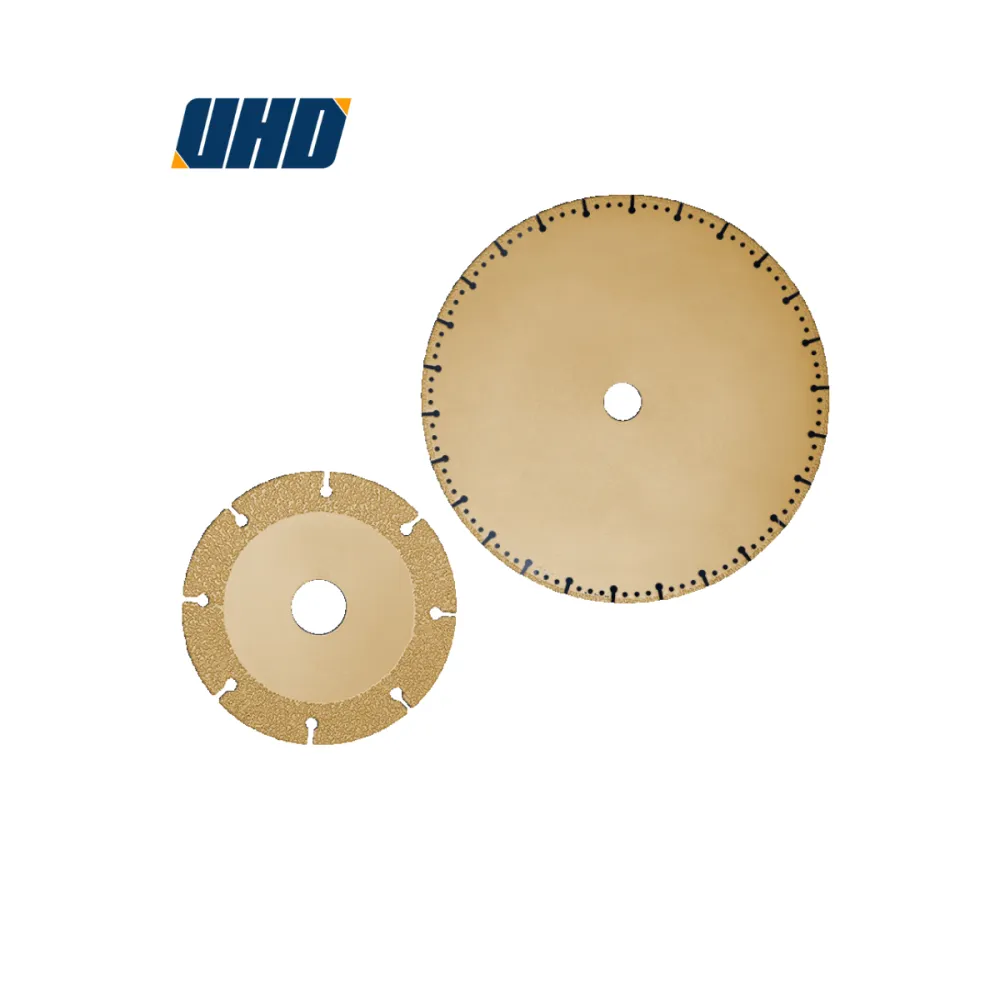
UHD Ultrahard Tools Co., Ltd supports industrial buyers with a range of ultrahard material tool options—including diamond tools, abrasives, and custom brazed diamond abrasives—and can align configurations to specific processing conditions when required.
For faster and more accurate selection, prepare the following information for your supplier/engineering review:
Practical note: If you can share photos of the workpiece and the tool wear condition, it often accelerates the selection discussion and reduces back-and-forth—especially for international B2B sourcing.
Henan UHD Ultrahard Tools Co., Ltd is a high-tech enterprise in China focused on R&D, manufacturing, and sales of ultrahard material tools. UHD provides performance-oriented solutions for industrial users in metal processing and stone processing, with an emphasis on quality-first and application-specific positioning.
Backed by ongoing technical development and collaboration with academic partners (including Henan University of Technology), UHD also maintains a structured B2B export service system to support global buyers through mainstream international trade platforms—helping ensure product consistency and communication efficiency across markets.


.png?x-oss-process=image/resize,h_1000,m_lfit/format,webp)
.png?x-oss-process=image/resize,h_1000,m_lfit/format,webp)