Stone Hardness-Based Customization of Brazed Diamond Grinding Tools (UHD): A Practical Technical Guide
03 03,2026
UHD
Tutorial Guide
This technical guide explains how to scientifically customize UHD brazed diamond grinding tools based on stone hardness, helping stone processors and equipment manufacturers achieve higher grinding efficiency and longer tool life. It outlines practical hardness classification references (including Mohs-based benchmarking) and links common stone mineral compositions to real machining challenges such as fast wear, glazing, and low removal rates. Key tool parameters—diamond grit size and distribution, concentration, and bond/body material—are described in clear, actionable terms, showing how each variable impacts surface finish, cutting aggressiveness, heat generation, and durability 📌. The guide also walks through a proven end-to-end workflow from sample evaluation and trial grinding to parameter tuning and stable mass production, highlighting critical control points and common pitfalls. To improve selection accuracy, it introduces experience-based formulas and pre-judgment models that translate hardness and process targets into recommended parameter ranges. Finally, representative application cases demonstrate how customized solutions address efficiency loss and premature wear across different stone types, supported by suggested charts, real photos, and an interactive Q&A section to improve on-page engagement. For readers needing faster validation, contact us to get customized grinding-tool technical support tailored to your stone and equipment requirements ✅.
In stone fabrication, “diamond tool doesn’t work” is rarely the real problem. In most cases, the tool simply isn’t matched to the stone hardness and abrasiveness. When the match is off, manufacturers see the same symptoms: glazing, slow cutting, excessive heat, premature diamond pull-out, and unpredictable finish quality.
This practical guide explains how to scientifically customize UHD brazed diamond tools based on stone hardness—using clear parameters, test-driven adjustments, and a field-proven selection model. ✅
1) Stone Hardness: What Buyers Should Measure (Not Guess)
“Hard stone” is a popular phrase, but for tool selection it needs a measurable reference. In industrial practice, buyers typically combine Mohs hardness with mineral composition (especially quartz content) because quartz increases abrasiveness and accelerates wear on the working layer.
Stone Hardness & Abrasiveness Quick Table (Reference)
Stone Type (Typical)
Main Minerals
Mohs (Approx.)
Abrasiveness Risk
Typical Processing Pain Point
Marble / Limestone
Calcite, Dolomite
3–4
Low
Edge chipping, burn marks if too aggressive
Granite
Quartz, Feldspar, Mica
6–7
Medium–High
Fast wear, glaze if bond/structure is wrong
Quartzite
High quartz content
7
Very High
Extreme wear, heat, uneven scratch pattern
Basalt / Hard sandstone
Silicates, quartz mixes
5–7
Medium–High
Tool loading + rapid dulling in dry conditions
Data note: Mohs ranges vary by quarry and batch. For reliable customization, combine hardness with trial feedback on heat, wear, and scratch behavior.
2) UHD Brazed Diamond Tools: The 3 Parameters That Decide Performance
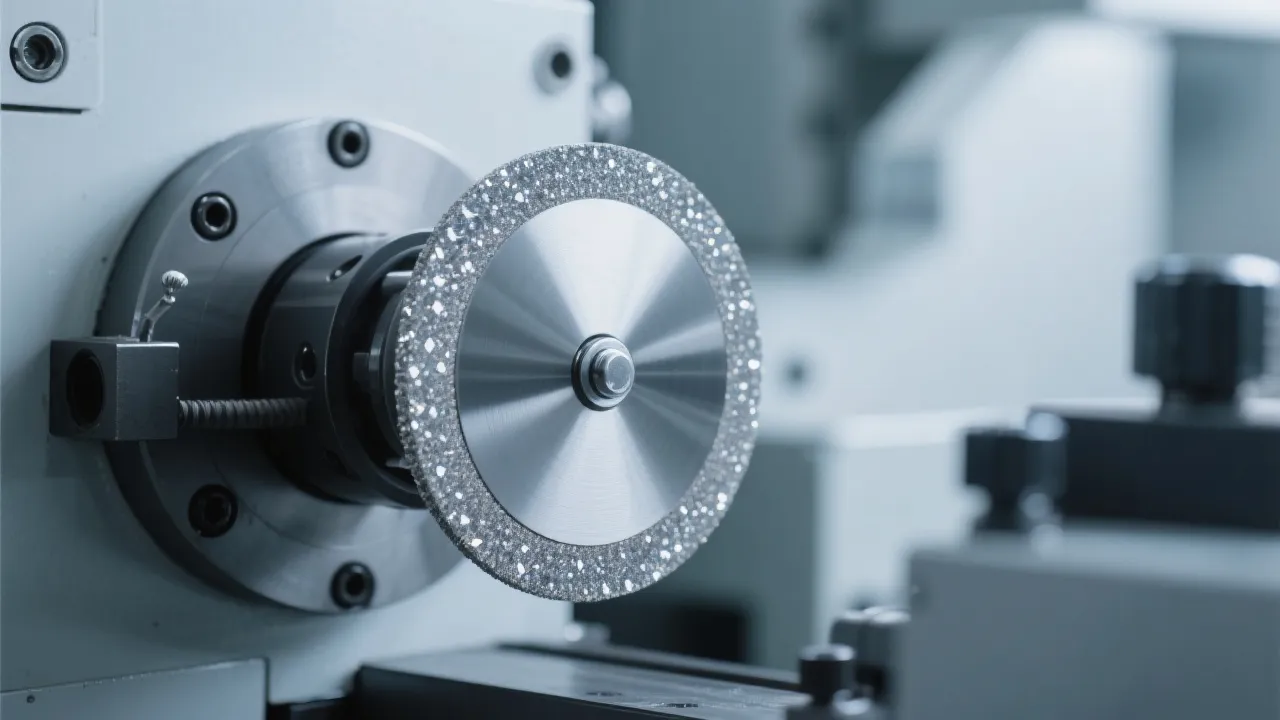
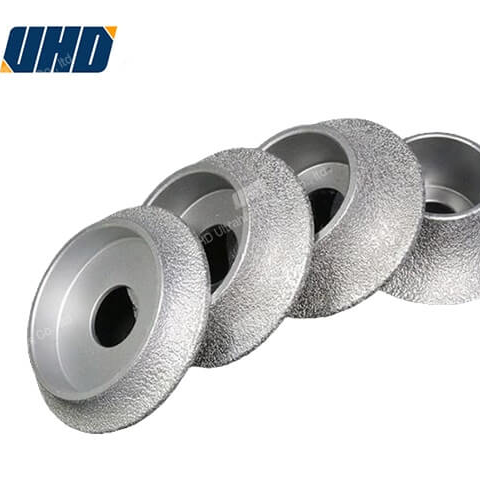
UHD brazed diamond tools are valued for strong diamond retention and stable cutting points, especially where consistent performance matters. Yet “brazed” doesn’t mean “one-size-fits-all.” The performance is mainly decided by three adjustable parameters: diamond grit, diamond concentration, and matrix/structure design.
A) Grit size (mesh) = finish vs. productivity
Coarser grits (e.g., 30/40, 40/50) remove stock faster but leave deeper scratches. Finer grits (e.g., 100/120, 200/230) improve surface quality but can generate heat if the tool can’t self-sharpen. In many stone lines, a well-tuned sequence can reduce rework and improve throughput by 10–25% by stabilizing the scratch pattern.
B) Diamond concentration = life vs. chip space
Higher concentration generally increases tool life, but it also reduces chip space and can raise temperature—especially on low-porosity stones. As a practical reference, many fabrication scenarios operate around 18–28% diamond concentration by volume equivalent (tool design dependent). The target is not “max concentration,” but stable sharpness with controlled heat.
C) Tool structure & matrix = anti-glazing and heat control
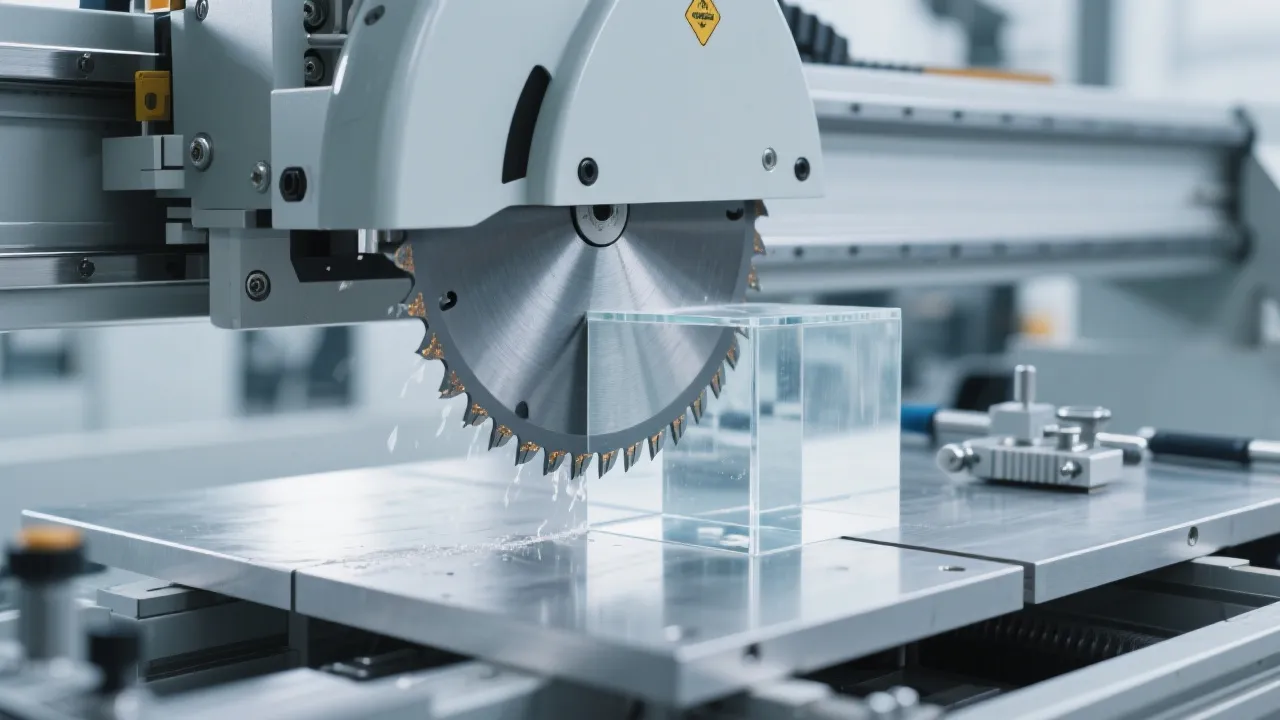
Structure (segment slots, chip channels, working layer thickness, and brazing pattern) controls debris removal and cooling. On abrasive stones (high quartz), a structure that clears chips efficiently can reduce surface burning and may extend effective tool life by 15–35% in real production lines—assuming stable spindle speed, feed rate, and coolant delivery.
3) A Clear Customization Workflow: From Sample to Mass Production
A repeatable process keeps customization efficient and prevents “trial-and-error forever.” Below is a workflow stone factories and equipment makers can implement with minimal disruption.
Step-by-step process (field-ready)
Confirm stone profile: stone name + quarry (if known), slab thickness, water/dry mode, target finish (calibrating, honing, polishing prep).
Baseline parameters: current tool spec, spindle RPM, feed speed, contact pressure, coolant flow. Many performance issues are parameter mismatches, not tool defects.
Sample test (small batch): run 20–60 minutes stable cutting; record removal rate (mm/min), tool wear (g or mm), surface scratch uniformity, and temperature trend.
Adjust one variable at a time: typically grit → concentration → structure. Changing multiple variables together makes the result impossible to interpret.
Validation run: aim for repeatable results across at least 2 slabs/parts. For many factories, “repeatability” matters more than peak speed.
Mass production control points: diamond quality consistency, brazing temperature window, working layer height tolerance, and runout control for stable finish.
Common mistake: pushing higher feed rate to “force productivity.” If the tool starts glazing, the line may look faster for 10 minutes—and then slows down with overheating, frequent dressing, and inconsistent quality. ⚠️
4) Practical Selection Model: An Experience Formula You Can Actually Use
Stone hardness is only part of the picture. Two stones with similar Mohs values can behave very differently based on quartz content, grain size, and porosity. A useful internal scoring method is to combine hardness and abrasiveness into a single reference factor.
Reference model (for pre-selection)
Stone Difficulty Index (SDI) = (Mohs Hardness) × (1 + Quartz Content % / 100)
Example: Granite with Mohs 6.5 and ~30% quartz → SDI ≈ 6.5 × 1.30 = 8.45. Quartzite with Mohs 7 and ~80% quartz → SDI ≈ 7 × 1.80 = 12.6.
SDI Range
Recommended Direction
Tool Tuning Focus
Risk to Watch
< 6
Finer grit feasible; moderate concentration
Finish stability, chip control
Chipping if too aggressive
6–10
Balanced grit; medium-high concentration
Anti-glazing structure, heat management
Rapid wear if chip evacuation is weak
> 10
Coarser/robust design; optimized channels
Wear resistance + consistent exposure
Overheating, diamond pull-out, uneven scratches
Use SDI as a starting point, then verify with a controlled sample test. The goal is predictable performance under your actual RPM, feed, and coolant conditions.
5) Typical Problems Caused by Wrong Matching (and How Custom Tools Fix Them)
When hardness and tool design don’t align, the line often “feels” unstable: sometimes it cuts, sometimes it burns, sometimes it wears out in half the expected time. Below are real-world patterns that frequently show up in production audits.
Case A: Fast wear on abrasive granite
Symptom: working layer wears quickly; output drops after short run time. A typical fix is moving toward a more wear-resistant design: refined diamond selection, optimized concentration window, and structure that clears chips efficiently. In many granite lines, this can improve effective tool life by 20–40% while keeping the finish consistent.
Case B: Low efficiency + burn marks on hard quartzite
Symptom: temperature rises fast, scratches become uneven, and the operator slows down feed to avoid damage. A customization direction is better heat control (chip channels + coolant access) and a grit/concentration balance that keeps cutting points active. Many operators see a measurable improvement in removal stability, often translating into 10–25% higher throughput with fewer rework passes.
Case C: Chipping on softer marble edges
Symptom: micro-chips at the edge, especially around veins. A common optimization is adjusting grit progression and contact aggressiveness rather than “stronger” tools. With a matched design, edge quality becomes more controllable, reducing polishing time and improving yield in profiling operations.
6) Quick Interactive Q&A (For Stone Shops and Machine Builders)
How can a buyer tell if the tool is glazing or simply underpowered?
Glazing usually shows as a “shiny” working area and a sudden drop in cutting action while temperature increases. If power is the issue, the machine struggles consistently from the start. A short controlled test (fixed RPM/feed) plus wear observation typically clarifies it within 15–30 minutes.
Is higher diamond concentration always better for hard stones?
Not always. Higher concentration can raise heat and reduce chip space. For many hard-and-abrasive stones, a “balanced” concentration with an efficient chip-channel structure outperforms an overly dense design in real production.
What sample information helps engineers customize faster?
Stone type/quarry (if available), processing step (calibrating/honing/profiling), wet or dry mode, current tool spec, RPM/feed, and a short video or photos of the surface after processing. Even two slabs from different batches can behave differently—so “batch notes” matter.
Editorial note: performance figures shown are industry reference ranges observed across multiple stone-processing scenarios; results vary with stone batch, machine rigidity, coolant delivery, and operator parameters.



.png?x-oss-process=image/resize,h_1000,m_lfit/format,webp)

.png?x-oss-process=image/resize,h_1000,m_lfit/format,webp)