Industrial Diamond Tools Failure: 5 Root Causes and Preventive Maintenance Strategies
24 03,2026
Industry Research
This industry-focused guide examines why industrial diamond tools fail in real production environments and how to prevent repeat downtime. It breaks down five primary failure mechanisms—braze layer cracking, diamond dulling (glazing), excessive matrix wear, insufficient cooling, and installation/runout errors—explaining the technical root causes, typical symptoms on the tool and workpiece, and the operating conditions that accelerate damage. To improve practical usability, the article references real failure cases with suggested photo/diagram callouts and provides step-by-step prevention actions, including coolant flow optimization, clamping and alignment best practices, and routine inspection checkpoints. The conclusion highlights how UHD brazed diamond tool technology, supported by internationally recognized certifications and responsive technical service, can help stabilize quality and extend tool life in demanding applications.
Why Industrial Diamond Tools Fail (and How to Prevent It): A Practical, Shop-Floor Guide
In high-load grinding and cutting—ceramics, carbide, glass, stone, composites—industrial diamond tools are expected to deliver repeatable surface quality, stable throughput, and predictable tool life. Yet in real production, failure rarely comes from “bad luck.” It is usually a chain reaction that starts with one of five root causes: braze-layer cracking, diamond dulling (glazing), excessive matrix wear, insufficient cooling, or installation error. This article breaks each one down with field-proven symptoms, technical mechanisms, and prevention steps that maintenance and process teams can implement immediately.
Fast diagnostic rule
If the tool fails early (first 10–20% of expected life), suspect braze, cooling, or installation. If it fails gradually (quality drift, burn marks, rising power), suspect dulling or matrix wear.
Reference indicators (typical)
Many plants flag risk when spindle power rises 10–25%, coolant flow drops 15%+, or runout exceeds 0.02–0.05 mm (process-dependent). Tracking these three signals often prevents most “sudden” failures.
The 5 Main Failure Modes: What You See vs. What’s Really Happening
1) Braze-layer cracking: micro-cracks that become catastrophic
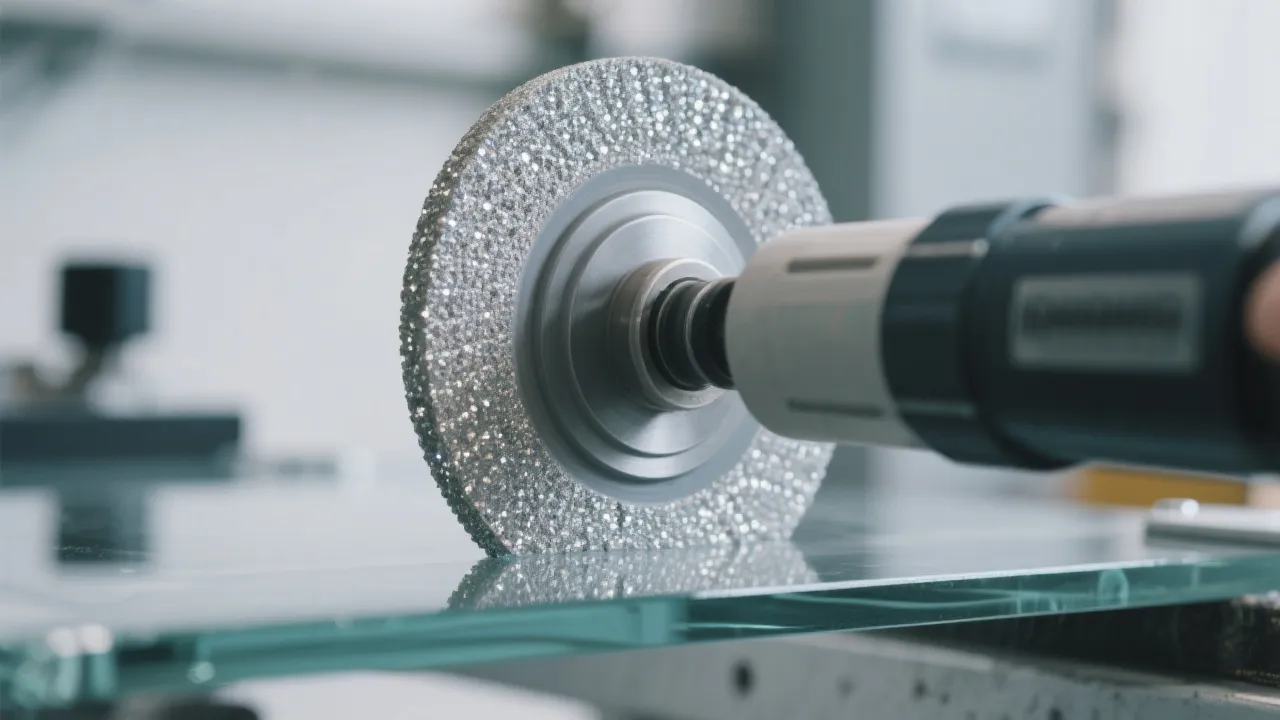
Typical symptoms: diamond particles shed in clusters, sudden loss of cutting ability, vibration spikes, and visible “missing segments” or patchy abrasive zones. In braze-bonded tools, the braze layer is the load-transfer bridge between diamond and tool body. Once it cracks, retention drops sharply.
Technical causes (most common): thermal shock from intermittent coolant, local overheating (high MRR with insufficient flushing), impact loading (hard entry/exit), or residual stress from brazing quality variation. In practice, a short cycle of “dry contact → coolant splash → dry contact” is often worse than steady low cooling.
Prevention checklist: keep coolant delivery stable (avoid on/off cycling), reduce shock at entry/exit (ramp in feed), verify tool is specified for the material hardness and contact geometry, and request traceable braze-process QC from suppliers (e.g., consistency of wetting, braze thickness control, and retention testing).
2) Diamond dulling (glazing): “The tool looks fine, but it stops cutting”
Typical symptoms: surface burn/heat tint, rising spindle load, squealing sound, and a polished tool face. Operators often respond by pushing harder—which accelerates heat and dulling.
Technical causes: diamonds become blunt under high friction, or the swarf clogs the working surface. This happens frequently when grit size or diamond concentration mismatches the workpiece, when parameters are set for “fast removal” without enough chip clearance, or when coolant filtration is poor and recirculated fines redeposit.
Field case (typical pattern)
A ceramic grinding line reported a ~18% increase in power draw and random edge chipping after switching to a finer grit for better finish. The finish improved for two shifts, then deteriorated. Root cause was glazing + swarf packing. A controlled dressing interval and higher flushing velocity restored stable cutting.
Prevention steps: match grit and bond to hardness/abrasiveness, set a measured dressing strategy (time- or load-based), keep coolant clean (filtration suited to your particle size), and use process monitoring: if load rises 10–20% while removal rate drops, treat it as early glazing—not “operator error.”
3) Excessive matrix wear: diamonds fall out before doing their job
Typical symptoms: fast loss of tool diameter/profile, unstable geometry, unexpectedly short life but with “fresh” sharp diamonds visible. This indicates the matrix (or supporting structure) is wearing too quickly, exposing and releasing diamonds prematurely.
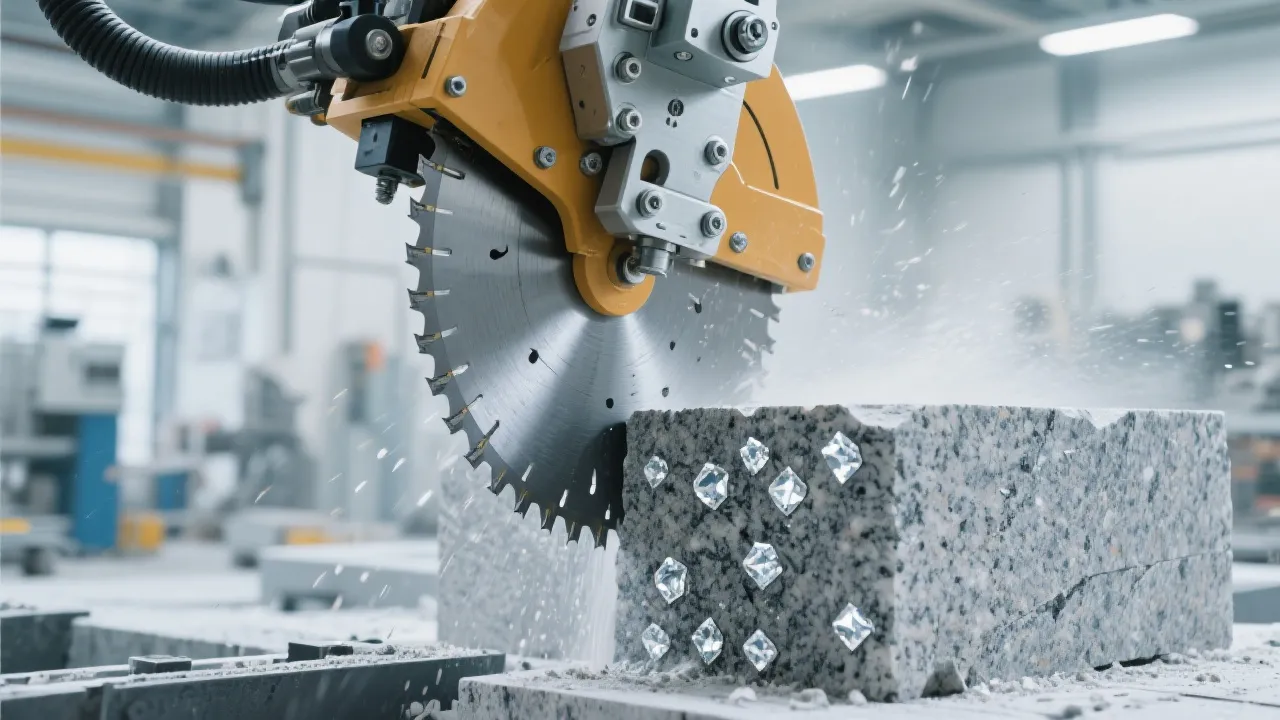
Technical causes: matrix hardness mismatch (too soft for abrasive materials like glass-filled composites), aggressive parameters, misaligned contact pressure, or abrasive contamination in coolant. In stone and concrete, silica fines can turn coolant into a lapping slurry if filtration is weak.
| Observed issue |
Likely mechanism |
Corrective action |
| Tool profile collapses quickly |
Matrix too soft / abrasive slurry |
Harder spec, improve filtration, reduce side load |
| Short life, diamonds look “unused” |
Premature pull-out due to wear |
Optimize contact area, confirm bond design, reduce impact |
| Sudden wear after coolant change |
New coolant carries more fines / wrong concentration |
Set cleanliness targets, stabilize mix ratio, monitor TSS |
4) Insufficient cooling: the hidden accelerator of every other failure
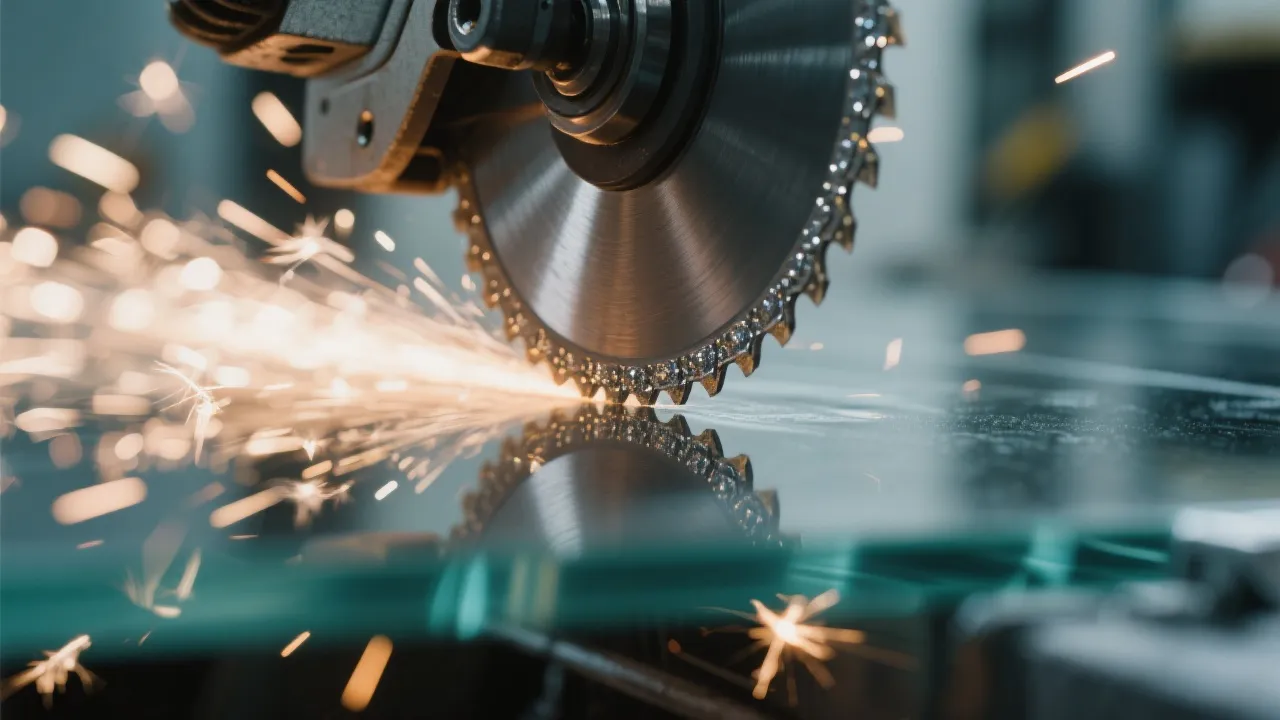
Cooling is not only about temperature. It also provides chip evacuation and keeps the cutting zone “open.” When cooling is insufficient, braze stress increases, diamonds dull faster, and the matrix can soften or wear abnormally.
Common real-world triggers: clogged nozzles, hoses bent after maintenance, poor nozzle aim (coolant hits the guard instead of the contact zone), pump degradation, and overly fine filtration causing pressure loss. Many lines see performance drop when flow decreases as little as 15–30%, especially at higher surface speeds.
Cooling system optimization (doable in one shift)
- Verify nozzle alignment to the actual contact point (mark it under slow jog).
- Measure flow rate at the nozzle (not at the pump) and log it weekly.
- Clean/replace nozzles on a fixed interval; don’t wait for visible clogging.
- Set a cleanliness target (filtration and settling) so swarf doesn’t recirculate.
- Keep coolant concentration stable; large swings can change lubrication and flushing behavior.
5) Installation error: runout, clamping stress, and “invisible” misalignment
Even a well-designed tool can fail quickly if mounted incorrectly. Installation error often appears as vibration, chatter, tapered wear, edge chipping, and inconsistent finish between parts. In many shops, runout is the single most under-checked parameter.
Technical causes: dirty flange faces, uneven bolt torque, incorrect adapter fit, damaged spindle taper, or clamping that introduces bending stress. Over-tightening can be as harmful as loose mounting—especially for thin bodies or segmented tools.
Installation steps that prevent 80% of mounting-related failures
- Clean mating surfaces (flange + tool + spacer) to bare metal; remove burrs and swarf.
- Torque bolts in a star pattern with consistent values; re-check after a short warm-up run.
- Measure runout at a defined reference radius; investigate if it exceeds your process limit.
- Confirm correct rotation, guard clearance, and that coolant lines won’t shift during operation.
Quality Control Meets Operating Discipline: A Simple Preventive Program
The most reliable plants treat industrial diamond tool life as a managed variable—tracked and improved—rather than a consumable expense. A lightweight preventive program can be built around three pillars: coolant stability, mounting integrity, and condition monitoring.
Weekly checks (15 minutes)
Log nozzle flow, visually verify aim, inspect tool face for glazing, and capture power/force trend. When trend drift appears, adjust before scrap happens.
Monthly checks (1 hour)
Measure spindle runout, audit flange cleanliness practices, review coolant cleanliness/filtration, and compare tool life by batch to catch supplier/process variation early.
When to escalate
If you see repeated braze cracking, unexplained diamond shedding, or large life variation between “same” tools, involve the tool maker for parameter mapping and retention analysis—those patterns are rarely solved by feed tweaks alone.
Where UHD Fits: Braze Reliability, Traceability, and Technical Support
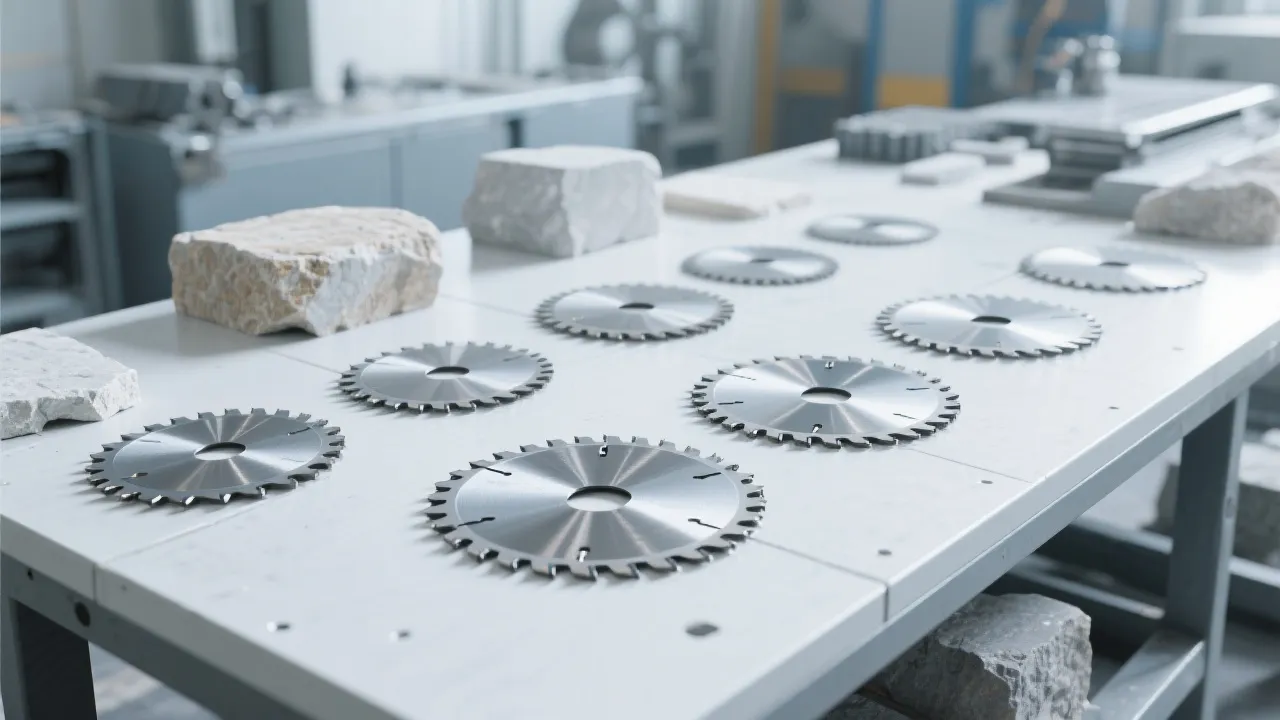
When failure analysis points to braze integrity, diamond retention, and process stability, tool selection matters. UHD focuses on braze-bonded diamond solutions designed to maintain consistent cutting performance under demanding thermal and mechanical loads, supported by documented quality management and internationally recognized compliance practices (where applicable to your market and industry requirements).
For teams looking to reduce unplanned stoppages, UHD’s approach typically combines tool specification matching (material, grit, concentration, geometry) with application guidance (coolant delivery, mounting practices, dressing intervals) so that product design and operating discipline reinforce each other.
Improve Retention. Reduce Scrap. Stabilize Your Process.
Explore how UHD brazed diamond tools can help address braze-layer cracking, glazing, and premature wear—backed by practical engineering support for parameter setup and troubleshooting.
View UHD Brazed Diamond Tools & Technical Support
Typical information to prepare: workpiece material, machine model, surface speed, feed, depth of cut, coolant type/flow, and photos of the worn tool.




.png?x-oss-process=image/resize,h_1000,m_lfit/format,webp)
.png?x-oss-process=image/resize,h_1000,m_lfit/format,webp)