Common Diamond Saw Blade Failures and Prevention: Extending Service Life with Vacuum Brazing
13 04,2026
Application Tutorial
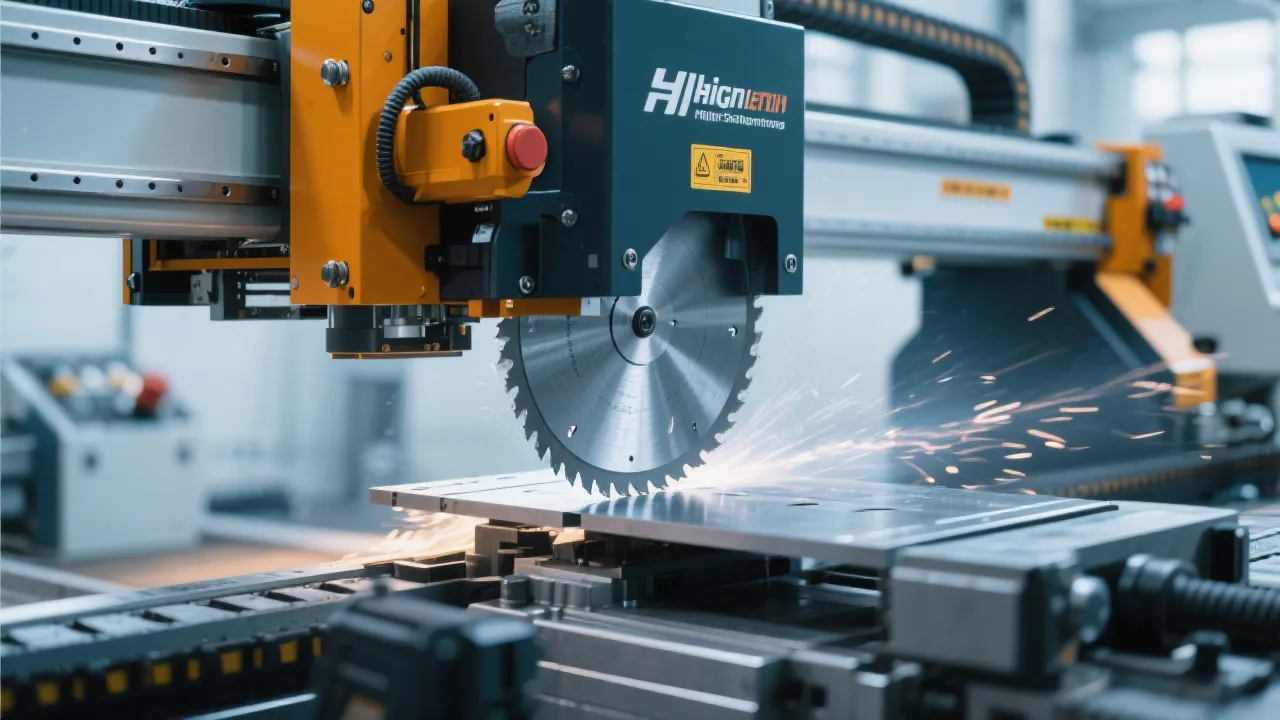
Diamond saw blades used in stone processing commonly fail through diamond segment pull-out, core cracking, glazing, and heat-related damage—issues that often trace back to bonding quality, thermal load, and improper operating parameters. This article examines the failure mechanisms behind these symptoms and explains how vacuum brazing improves joint integrity, wetting, and consistency compared with conventional joining methods, helping blades maintain cutting efficiency for longer service intervals. Practical, shop-floor guidance is included: selecting stable spindle speed ranges, controlling feed rate to avoid thermal spikes, managing coolant concentration and delivery, and implementing routine condition checks to catch early warning signals such as abnormal noise, discoloration, uneven wear, or micro-cracks. By linking process choices to observable wear patterns and maintenance actions, readers can optimize cutting workflows, reduce unplanned tool changes, and improve overall equipment utilization. For more high-efficiency cutting solutions, visit UHD’s technical column.
Common Diamond Saw Blade Failures in Stone Cutting—and How Vacuum Brazing Helps Extend Blade Life
In stone processing, a diamond saw blade rarely “fails suddenly.” Most breakdowns follow recognizable patterns: diamonds pull out, the steel core develops micro-cracks, segments glaze and overheat, and cutting quality drops long before a blade becomes unusable. Industry field reports commonly attribute 40–60% of premature blade retirement to avoidable operating factors (coolant mismanagement, mismatched RPM/feed, and insufficient tool monitoring), while the rest is linked to material variability and joining quality.
This tutorial explains the main failure modes in a practical way, then shows why vacuum brazing—a process increasingly adopted by performance-focused manufacturers such as UHD—can improve joint integrity and stability under heat and load. The goal is not to sell a buzzword, but to help engineers and shop supervisors reduce scrap, downtime, and total cost per cut.
1) Failure Mode Map: What “Blade Failure” Usually Looks Like on the Shop Floor
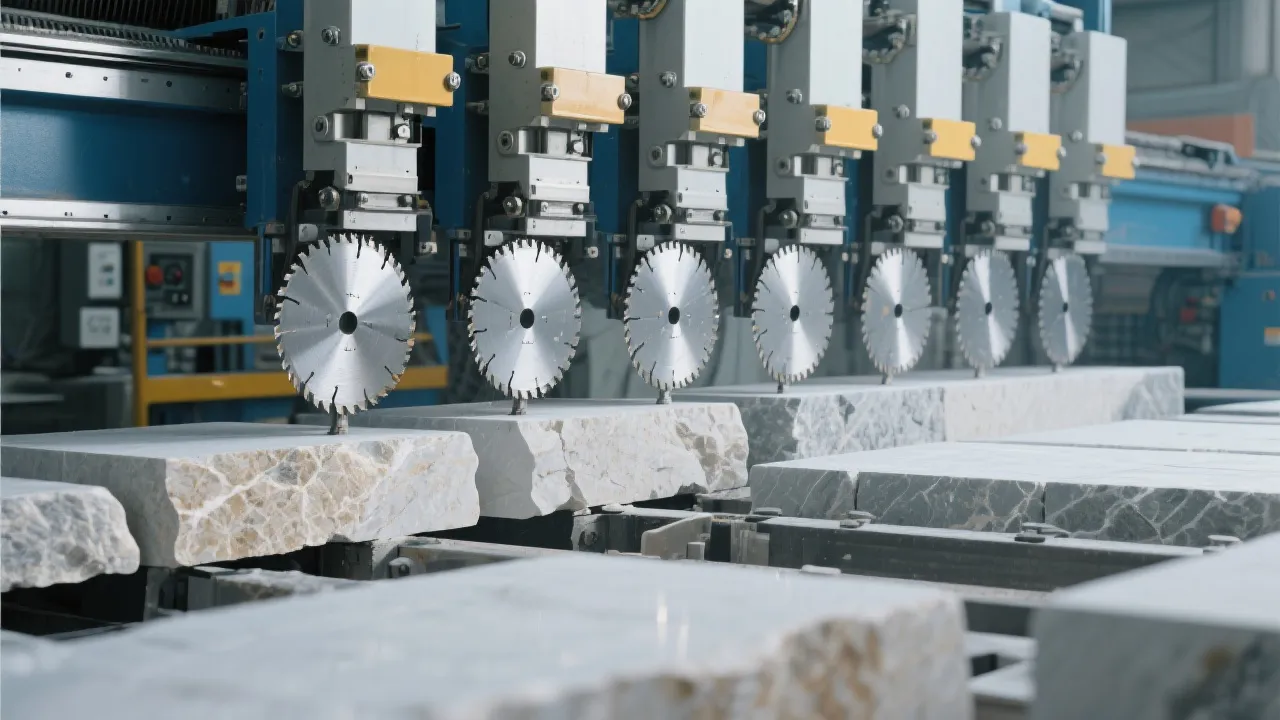
In most stone-cutting lines (granite, engineered stone, quartzite, porcelain slabs), blade failure can be grouped into three dominant categories. Understanding which one is happening first is the fastest route to prevention.
A) Diamond Pull-Out / Segment Shedding
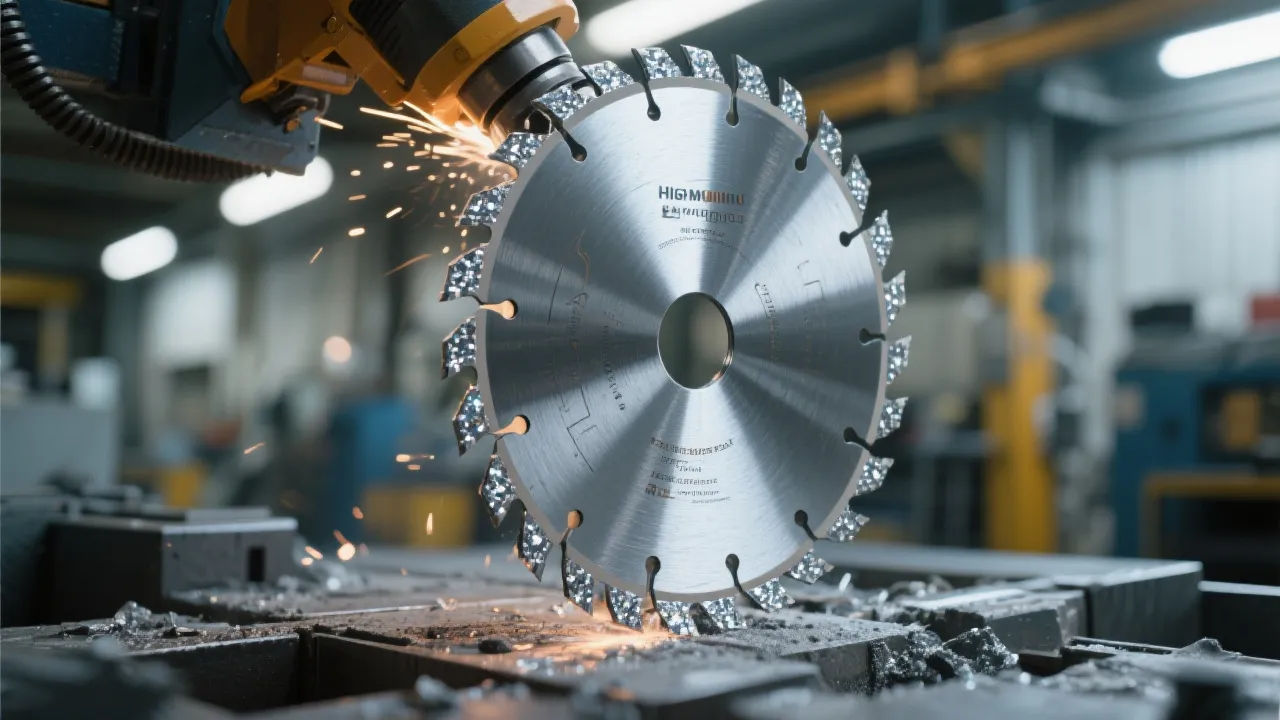
Typical symptoms include sudden loss of cutting ability, louder cutting noise, “missing grit” appearance on the working edge, and uneven wear across the blade circumference. In field audits, segment-related losses often correlate with local overheating, aggressive feed spikes, or insufficient bond strength at the diamond–matrix interface.
B) Steel Core / Substrate Cracking
Hairline cracks often start at stress concentrators (gullet transitions, segment slots, weld/braze heat-affected zones) and can grow under cyclic thermal and mechanical loading. Core cracks are not only a cost problem—they are a safety risk and should trigger immediate inspection and removal.
C) Thermal Damage (Glazing, Burning, Warping)
Overheating can glaze segments (polished, shiny cutting surface), create burn marks on the workpiece, and induce blade wobble. When the cutting zone repeatedly exceeds stable operating temperatures, the bond degrades and the blade becomes sensitive to micro-chipping and runout. For many stone shops, thermal issues are the hidden root cause behind both pull-out and cracking.
2) Root Causes: Why These Failures Happen (And Why “More Power” Often Makes It Worse)
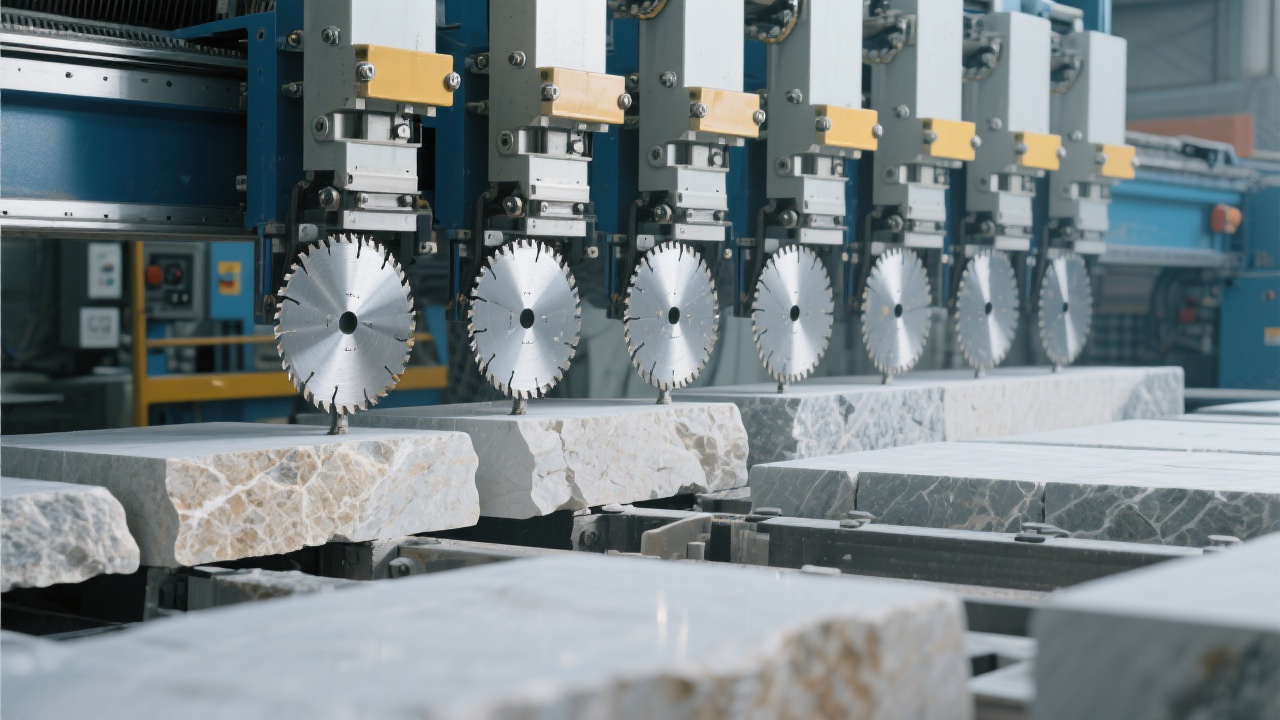
Premature blade failure usually comes from a combination of process parameters and joining quality. In technical terms, blades fail when the cutting system cannot keep the diamond exposure, chip evacuation, and heat removal in balance.
Common Root-Cause Triggers (Observed Across Many Stone Lines)
- RPM–feed mismatch: too high RPM with insufficient feed can cause glazing; too high feed with low RPM can cause impact loading and edge chipping.
- Coolant delivery issues: low flow, clogged nozzles, wrong nozzle angle, or poor targeting at the cutting arc.
- Material variability: quartz content, resin content (engineered stone), or density changes across a slab.
- Runout and vibration: worn flanges, spindle issues, poor mounting cleanliness—often seen as “mysterious” uneven wear.
- Weak diamond retention / joint defects: voids, oxidation, or incomplete wetting at the bond interface.
Many teams try to compensate by increasing power or pushing feed harder. That can temporarily raise throughput, but it also raises the probability of thermal spikes and shock loads—two of the most reliable ways to accelerate segment degradation and initiate substrate cracking.
3) Where Vacuum Brazing Makes a Practical Difference
Vacuum brazing is often discussed as a “premium” joining method, but the real value is simpler: it aims to create a clean, oxide-minimized joining environment that supports more consistent wetting and bonding. In stone cutting, the bond zone is repeatedly exposed to heat cycles, coolant chemistry, and vibration. A more stable joint helps delay pull-out and reduces the chance of crack initiation near the joining region.
Why Vacuum Brazing Can Improve Blade Stability (Mechanism-Level View)
- Lower oxidation risk during joining: cleaner surfaces improve filler wetting and reduce weak interfaces.
- More uniform heat distribution: controlled thermal cycles reduce localized overheating and residual stresses.
- Higher consistency batch-to-batch: stable furnace parameters can reduce variability compared with less controlled environments.
In many production environments, a well-implemented vacuum-brazed design can translate into fewer “early-life” failures. Shops that track blade performance often see a meaningful reduction in unplanned blade changes, especially on heat-sensitive materials where glazing and bond fatigue appear early.
Process Comparison Snapshot (Operational Impact)
| Item |
Conventional Joining (General) |
Vacuum Brazing (General) |
| Oxide formation during joining |
Higher risk (depends on shielding/control) |
Lower risk in vacuum environment |
| Bond/interface consistency |
More variable across batches |
Typically more consistent with controlled furnace cycles |
| Residual stress tendency |
Can be higher if heating is uneven |
Often reduced via uniform thermal profile |
| Expected effect on early pull-out risk |
Moderate to higher (depends on interface quality) |
Often lower due to improved interface integrity |
Note: Real outcomes depend on blade design, filler selection, furnace recipe, and operating conditions (RPM, feed, coolant, mounting).
4) Practical Operating Tips That Prevent Most Premature Failures
Even the best blade technology can be defeated by unstable operating conditions. The following methods are used by high-performing stone shops because they’re measurable and easy to standardize across shifts.
Tip 1: Set RPM and Feed as a Pair (Not as Separate Knobs)
A useful rule in troubleshooting is: glazing = too much speed for the actual cutting load, while chipping/pull-out = too much load for the segment’s stability. If cut marks show polishing and heat tint, reduce RPM slightly or increase feed modestly to restore chip formation. If segments chip and the machine sounds “hammering,” reduce feed and verify spindle runout before blaming the blade.
In many stone cutting operations, stabilizing the process can reduce blade temperature peaks by 10–25% (observed via IR spot checks near the cutting zone), which often translates directly to slower bond fatigue.
Tip 2: Treat Coolant as a Cutting Parameter, Not a Utility
Cooling failures are rarely about “not enough water” overall—more often it’s poor delivery at the arc. Best practice is to target coolant into the entry zone and maintain consistent flow and filtration. As a reference range used in many plants, coolant concentration for corrosion control and lubrication is typically held around 2–5% (depending on fluid type), while total dissolved solids and sludge should be monitored to avoid abrasive recirculation that accelerates wear.
If operators frequently increase coolant flow to stop burning, it’s a sign to inspect nozzle alignment and filter condition first—then check RPM/feed stability.
Tip 3: Add a Simple “Early Fault” Inspection Routine (5 Minutes per Shift)
Many failures give early signals. A short routine can prevent a crack from becoming a stoppage and can protect the spindle and flanges from collateral damage. A practical checklist includes:
- Visual segment scan: look for uneven wear bands, missing diamond exposure, or edge chipping.
- Core inspection: check gullets/slots for micro-cracks; use dye penetrant for suspect blades.
- Mounting cleanliness: wipe flanges; trapped slurry can create runout that mimics “bad blade” symptoms.
- Sound and vibration notes: operators often hear instability before it shows on the slab.
Plants that standardize these checks often report noticeable reductions in emergency blade swaps and “mystery” surface defects, particularly when multiple shifts run different materials.

5) Decision Clues: When to Suspect Process Issues vs. Blade Joining Quality
For troubleshooting, it helps to separate “system instability” from “tool integrity.” Neither is rare, but they leave different fingerprints.
More Likely Process-Driven
- Burn marks appear only on certain slabs or certain operators/shifts.
- Glazing improves quickly after RPM/feed adjustment or nozzle realignment.
- Uneven wear correlates with flange dirt, spindle vibration, or mounting practices.
More Likely Tool Integrity / Joining-Driven
- Repeated early segment loss under normal, stable cutting parameters.
- Failure concentrated near joint regions across multiple blades from a batch.
- Pull-out occurs without clear overheating indicators or coolant problems.
This is where vacuum brazing is often evaluated: not as a marketing label, but as a method to reduce bond variability and strengthen confidence that a stable process will produce stable results.


.png?x-oss-process=image/resize,h_1000,m_lfit/format,webp)
.png?x-oss-process=image/resize,h_1000,m_lfit/format,webp)