How to Choose a Diamond Saw Blade for Concrete Cutting: Selection Guide for Hard Materials
11 03,2026
UHD
Application Tips
Choosing the right diamond saw blade for concrete cutting is the fastest way to improve productivity, blade life, and jobsite safety. This practical guide explains why common failures—chipping, glazing, overheating, and premature wear—happen, then walks you through matching blade design to material behavior across concrete, granite, stone, and ceramic. You’ll learn how key parameters (diamond concentration, bond hardness, segment structure, and core stability) should change with different aggregates and reinforcement conditions, and when brazed blade technology makes sense for demanding cuts. The article also covers field-ready setup rules: correct mounting, RPM selection, wet vs. dry cooling, and vibration control—plus quick checkpoints to diagnose over-wear before the blade is damaged. With UHD professional technical support and solutions trusted by global customers, you can standardize blade selection across jobsite and workshop scenarios for consistent results.
How to Choose a Diamond Saw Blade for Concrete Cutting (Without Burning Through Blades)
If you cut concrete, stone, or ceramic long enough, you’ll notice a pattern: two crews can run the same machine, but one finishes clean and fast, while the other fights glazing, overheating, vibration, and premature segment loss. The difference is rarely “luck”—it’s selection and setup. This guide helps you choose the right diamond saw blade for hard materials and apply it correctly on-site or in a workshop, with practical checks you can use today.
Practical benchmark: on typical reinforced concrete, a correctly matched blade commonly lasts 1.5×–3× longer than a mismatched “general-purpose” blade, while reducing cut-time by 10%–25% (results vary by aggregate, rebar ratio, operator and cooling).
1) The Basics: Why Concrete & Hard Materials Punish the Wrong Blade
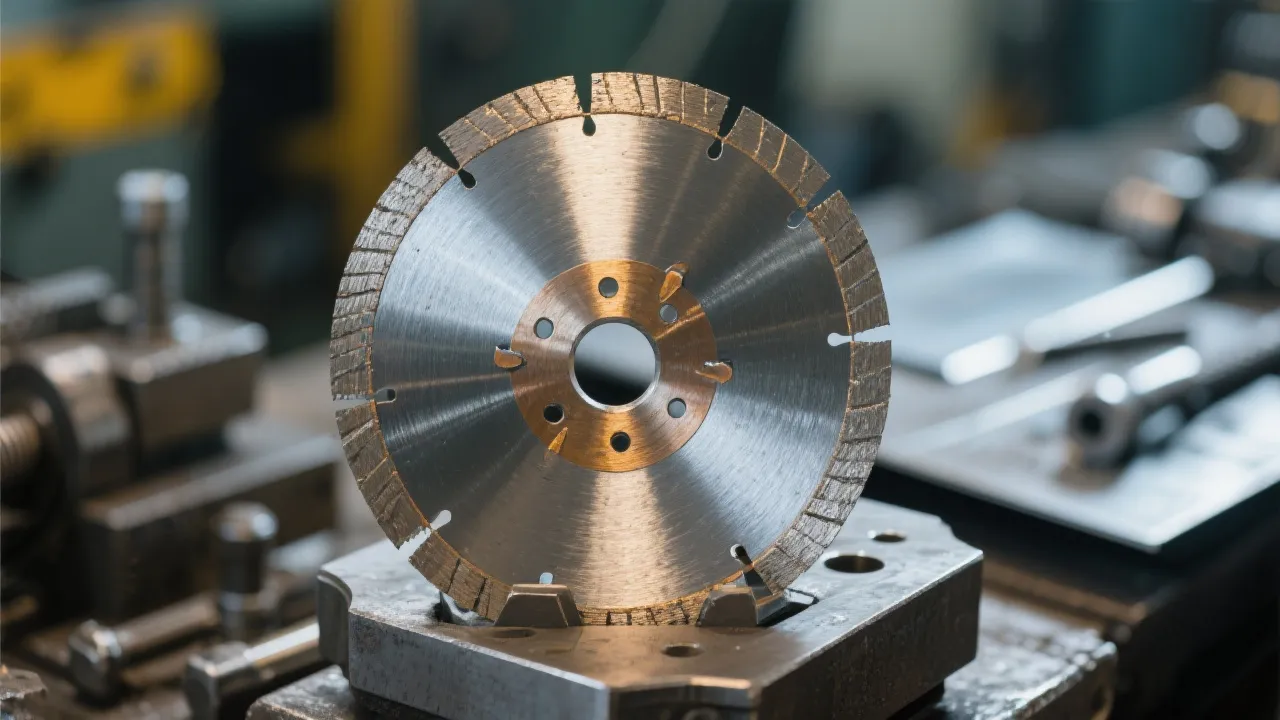
A diamond blade isn’t “sharp” in the same way a steel tooth blade is. It works by controlled abrasion. Your blade’s performance is a balance between diamond exposure (cutting ability) and bond wear (how quickly fresh diamonds are revealed). Get that balance wrong, and the symptoms show up fast.
Common jobsite problems—and their real causes
Glazing (blade “skates” and won’t bite): bond too hard for the material, RPM too low, or insufficient load pressure.
Overheating / blue marks / warping: wrong blade core design, poor cooling, too high RPM, or side loading in the cut.
Chipping on tile/stone edges: segment design too aggressive, wrong rim type, excessive vibration, or feed too fast.
Segment loss: poor brazing/sintering quality, overheated core, incorrect application (dry vs wet), or severe shock loading.
2) Blade Selection: Match the Blade to the Material (Not the Other Way Around)
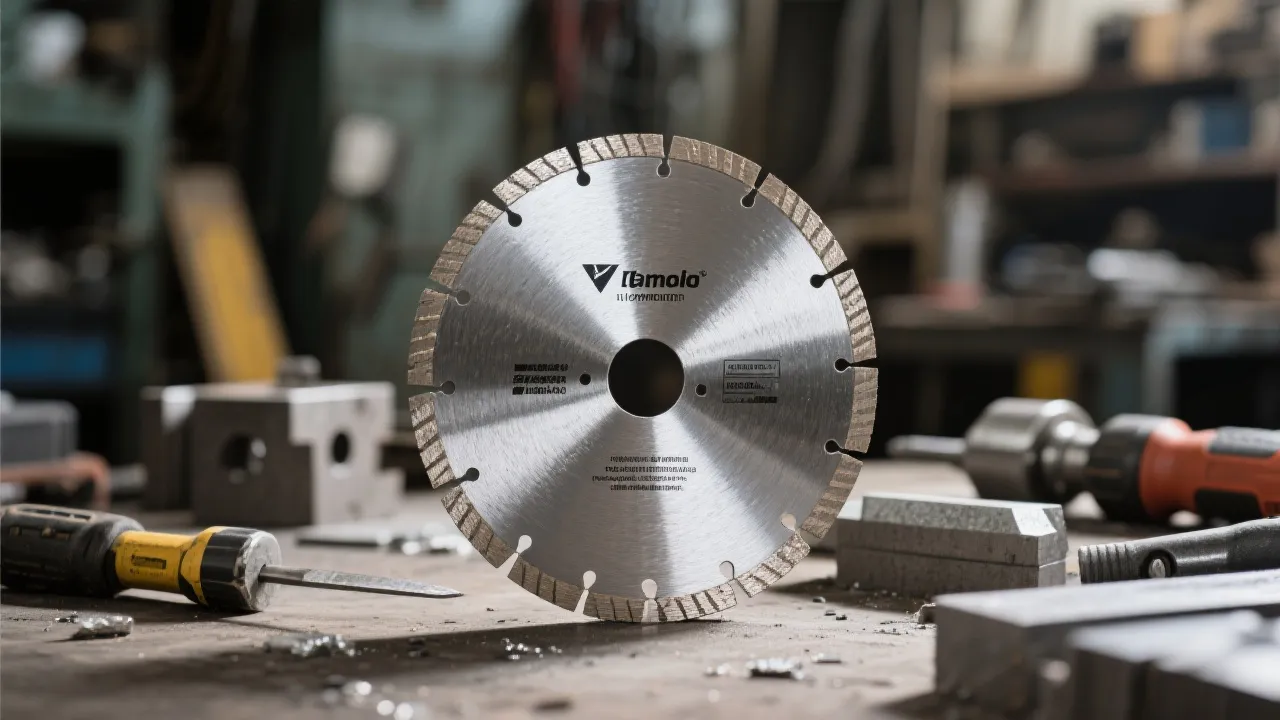
When you choose a blade, you’re essentially choosing how the blade will wear. Hard materials (granite, porcelain) need a different bond behavior than abrasive materials (green concrete, asphalt). Here’s the key rule you can keep in your pocket: hard material → softer bond (so it keeps exposing diamonds); abrasive material → harder bond (so it doesn’t wear away too fast).
Quick comparison table (selection cheat sheet)
Material / Scenario
Recommended bond
Diamond concentration (typical)
Segment / rim direction
Reinforced concrete (medium-hard aggregate)
Medium bond
High (around 20%–28%)
Turbo or segmented for cooling & debris removal
Cured concrete with hard aggregate
Softer bond
Medium-high (18%–25%)
Segmented with deep gullets to control heat
Green concrete (more abrasive)
Harder bond
Medium (15%–22%)
Segmented; prioritize wear resistance
Granite / engineered stone
Soft to medium-soft bond
High (22%–30%)
Turbo rim for cleaner edge; stable core
Porcelain tile / ceramic (chip-sensitive)
Soft bond, fine cutting action
Medium-high (18%–26%)
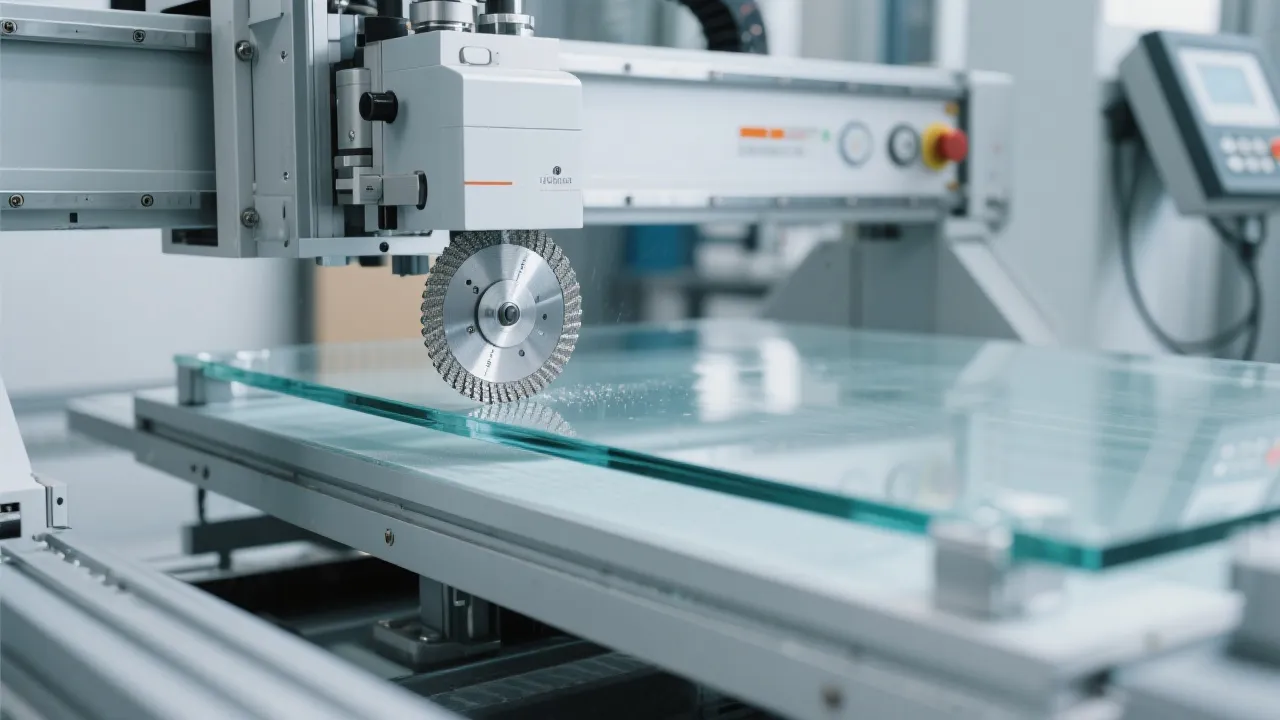
Continuous rim or fine turbo; wet cutting preferred
Tip: if your blade polishes the surface instead of cutting, your bond is likely too hard for that material—or your setup isn’t letting the diamonds work.
Blade structure choices that matter more than you think
You’ll see plenty of “one-blade-cuts-all” marketing. In real work, structure matters:
Segment height: higher segments generally support longer life, but need stable cooling and correct feed to avoid heat stress.
Gullet depth & spacing: deeper gullets remove slurry/dust better and reduce heat; useful in concrete and abrasive stone.
Core thickness: thicker cores improve stability in heavy duty cuts; thinner cores cut faster but can amplify vibration if your machine has runout.
Rim design: segmented for speed and cooling; turbo for a balance; continuous rim for clean edges on brittle materials.
3) Brazed (Brazing) vs. Other Processes: Where Brazing Earns Its Place
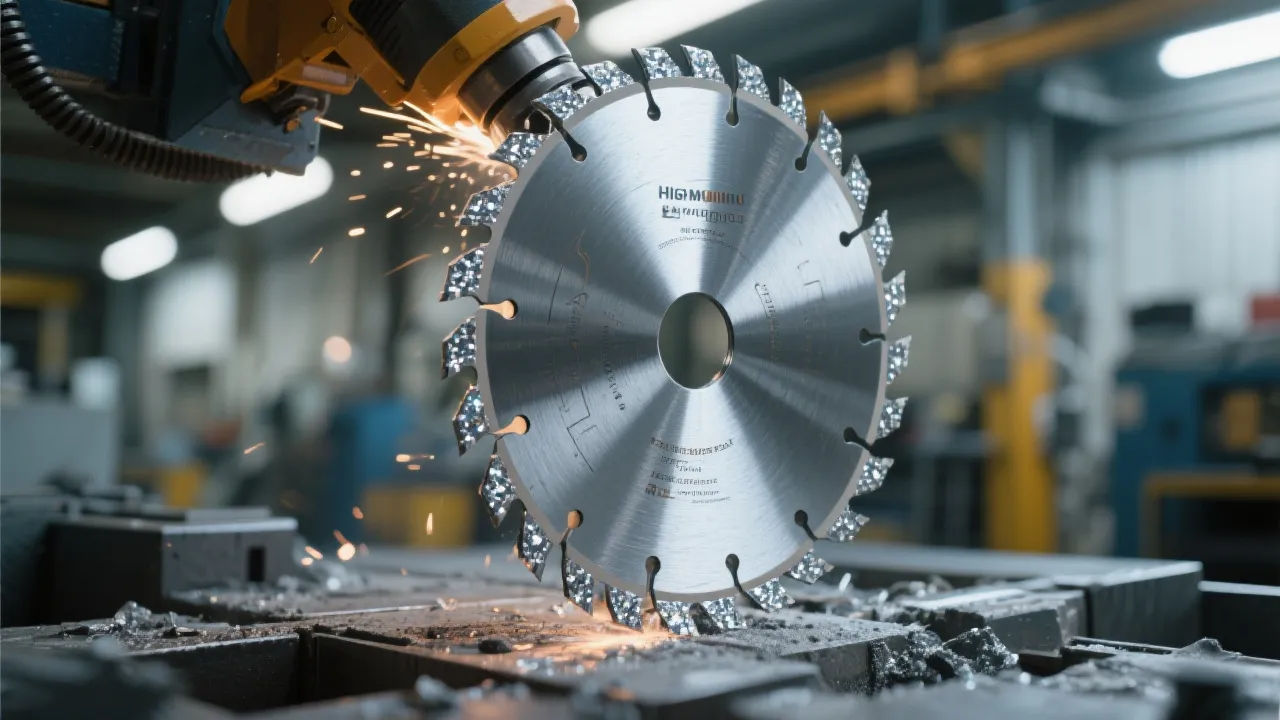
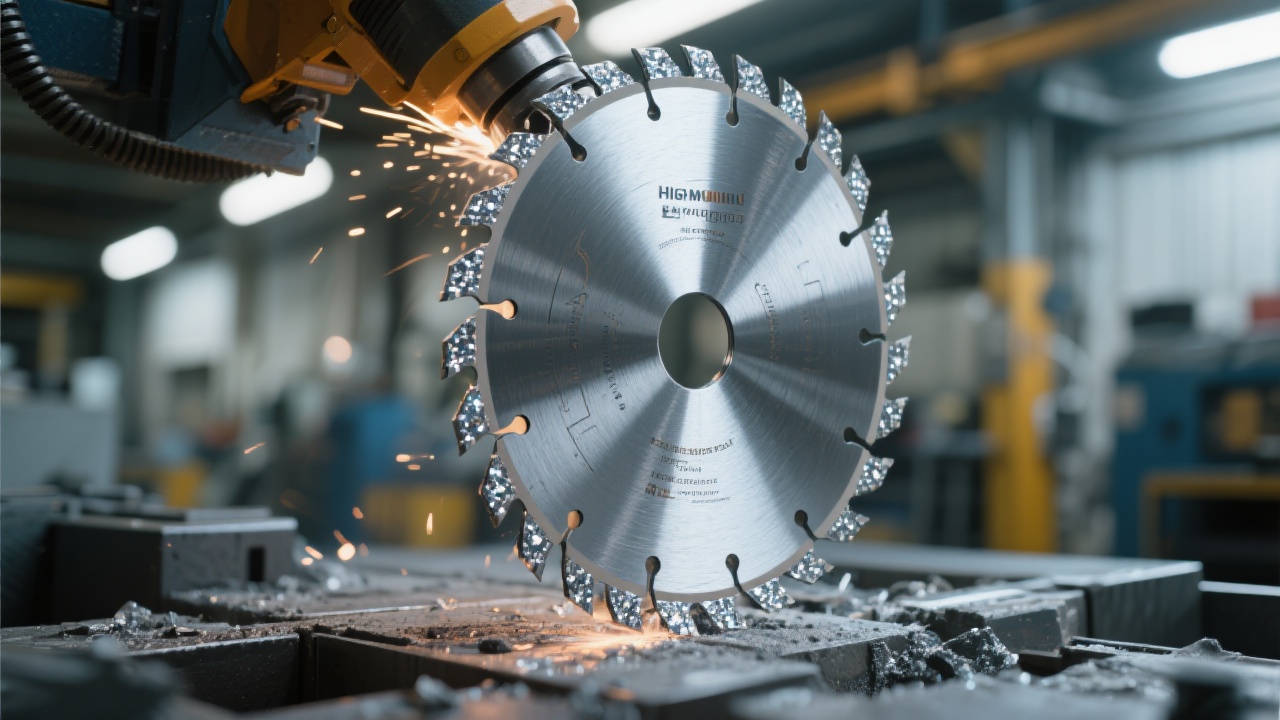
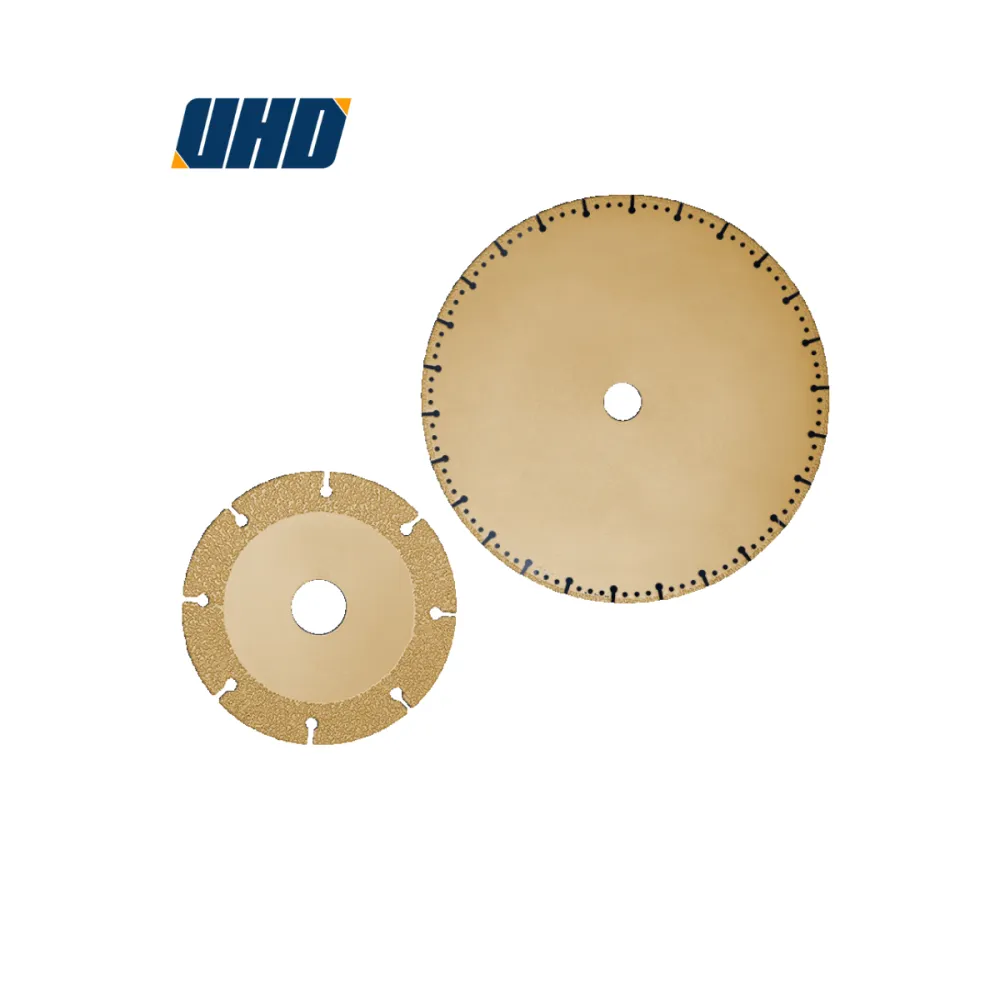
If you’re dealing with demanding hard materials, brazed diamond blades are often chosen for their strong diamond retention and aggressive cutting behavior—especially when you need fast starts and consistent bite. In practice, a high-quality brazing process can deliver:
Stronger diamond anchoring (reduced risk of early diamond shedding under proper use)
Better exposure of diamond grit for faster initial cutting
Stable performance when combined with a well-designed core and correct RPM/feed
The trade-off: brazed blades can be less forgiving if heat management is poor. If you regularly run dry cuts in thick concrete without intermittent cooling breaks, process choice won’t save you—setup will.
4) Real-World Setup: RPM, Cooling, Installation, and Vibration Control
4.1 Installation: small mistakes cause big wobble
Check flanges: clean, flat, and properly sized. Dirt or burrs create runout that eats segments.
Respect rotation direction: if the blade has an arrow, match it. Reversing can raise heat and reduce cutting stability.
Runout check: noticeable lateral wobble is a blade killer. If vibration increases, inspect spindle bearings and flanges.
4.2 RPM & feed: don’t “baby” the cut, don’t force it either
For many handheld and floor saw applications, staying near the manufacturer’s recommended RPM is non-negotiable. As a general reference, a 350 mm (14") blade often runs around 4,000–4,500 RPM (machine dependent). Too slow can glaze; too fast overheats and risks segment damage.
A practical operator cue: you want a steady cutting sound and consistent dust/slurry flow. If sound spikes and debris output drops, heat is rising—reduce feed pressure, improve cooling, or “pulse cut” (short in-and-out passes).
4.3 Cooling: the fastest way to extend blade life
Wet cutting typically improves segment life because it controls heat and clears fines. In workshop conditions (tile/stone), wet cutting is also your friend for edge quality. On sites where dry cutting is necessary, treat cooling like a routine:
Use intermittent passes: cut 10–20 seconds, then let the blade free-spin briefly to shed heat.
Keep the kerf clean: trapped dust increases friction and heat.
Don’t twist in the cut: side loading overheats the core and triggers vibration.
4.4 Vibration control: the silent performance killer
Vibration doesn’t just feel bad—it chips brittle edges, increases runout, and accelerates fatigue in the blade core. If you’re seeing micro-chips on porcelain or “wavy” cuts in stone, don’t only blame the blade.
Confirm stable base & clamping: a loose workpiece equals shock loading.
Inspect arbor and bushings: mismatched bushings create eccentric rotation.
Choose the right core stiffness: heavier-duty cores help when your cut is deep and continuous.
5) Mini Self-Test: Is Your Blade Being Over-Worn Right Now?
Answer quickly based on what you see today. If you hit 2 or more “Yes”, your blade is likely losing life to setup issues rather than normal wear.
If you checked multiple items: start with flange cleanliness, RPM compliance, and cooling routine. Then revisit bond selection using the table above. Most “bad blade” complaints trace back to these three.
6) Scenario Tags: Choose Like a Pro in Your Real Working Environment
Construction sites (fast pace, mixed concrete)
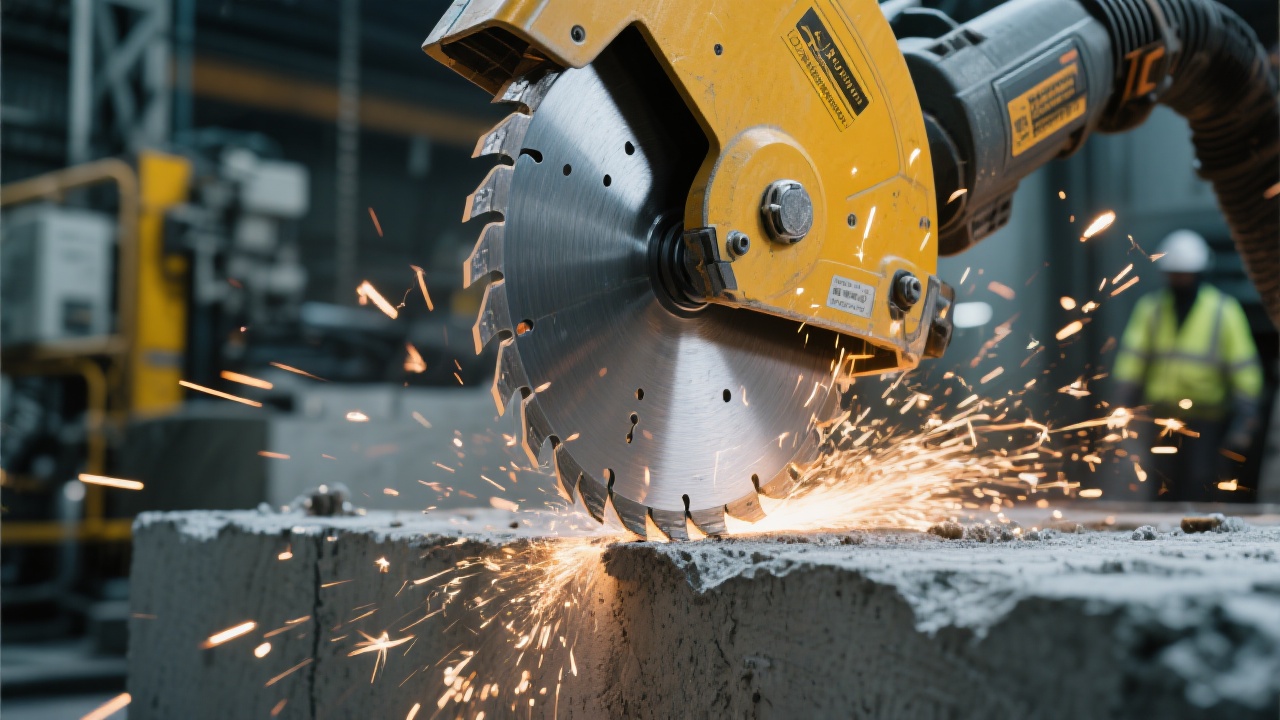
You need cooling-first designs: segmented/turbo rims, stable cores, and bond matched to aggregate. If rebar is frequent, prioritize blades designed for reinforced concrete and keep feed consistent—avoid “jabbing” into steel.
Stone fabrication shops (edge quality + repeatability)
Focus on rim type and vibration control. Wet cutting, rigid spindles, and correct core thickness help you hold tolerance. For engineered stone and granite, a softer bond often keeps the blade cutting freely rather than polishing.
Repair & maintenance teams (compact tools, unpredictable materials)
Choose a blade that’s forgiving across materials, but don’t accept chronic glazing as “normal.” If your day includes tile, concrete patching, and masonry, keep two blades: one tuned for concrete, one for brittle finishes.
Trusted by Global Teams: Make Your Next Cut More Predictable
Blade selection gets easier when you stop guessing and start matching: material hardness, abrasiveness, cutting method (wet/dry), machine RPM, and stability. UHD is a global customers’ trusted choice, and if you want a faster, safer route to the right spec, you don’t have to figure it out alone.
Get the Right UHD Diamond Saw Blade for Your Concrete or Stone Job
Share your material type, blade diameter, machine RPM, wet/dry method, and expected daily meters. UHD professional technical support will recommend a blade configuration that targets faster cutting, cooler operation, and longer service life.


.png?x-oss-process=image/resize,h_1000,m_lfit/format,webp)

.png?x-oss-process=image/resize,h_1000,m_lfit/format,webp)